14
Final
28
9
Final
20
7
Final
42
14
Final
51
7
Final
38
31
Final
35
45
Final
19
9
Final
56
24
Final
34
0
Final
34
20
Final
27
13
Final
16
14
Final
62
48
Final
45
0
Final
66
17
Final
45
3
Final
77
22
Final
44
10
Final
42
7
Final
55
22
Final
32
31
Final
42
0
Final
70
36
Final
27
12
Final
59
43
Final
36
13
Final
20
6
Final
45
24
Final
38
16
Final
27
30
Final
23
7
Final
31
20
Final
34
17
Final
72
27
Final
26
6
Final
28
33
Final
30
3
Final
69
17
Final
45
7
Final
31
10
Final
17
10
Final
42
18
Final
16
20
Final
38
17
Final
20
14
Final
56
21
Final
20
6
Final
54
3
Final
56
14
Final
56
9
Final
63
3
Final
35
33
Final
31
24
Final
21
21
Final
45
17
Final
21
38
Final
16
20
Final
3
7
Final
68
10
Final
38
3
Final
45
35
Final
9
28
Final
23
40
Final
42
20
Final
59
13
Final
24
0
Final
68
44
Final
20
0
Final
13
17
Final
34
7
Final
23
20
Final
24
3
Final
42
0
Final
73
23
Final
30
10
Final
34
14
Final
21
17
Final
42
3
Final
48
13
Final
36
3
Final
27
10
Final
70
20
Final
37
Syracuse defeated UConn 27–20 in a one-score game. Syracuse covered by 0.5; Game went Under by 11.5.
Adjust any factor to update your projected line
Positive adjustment = favours home team

~72°F
UConn won a shootout 48-45, with QB Joe Fagnano throwing for 446 yards and 3 TDs, and RB Cam Edwards rushing for 101 yards and 2 TDs, including the game-winner with 26 seconds left. The offense showed it can win in a high-scoring game, which may be crucial in future matchups.
The defense allowed 494 passing yards and 4 total TDs to FAU's QB, including a 90-yard pass. Despite forcing an interception, the unit struggled to contain the passing game, which could be a concern against strong aerial attacks.
This win gave UConn consecutive nine-win seasons for the first time in program history, building confidence and momentum. The team has shown resilience with multiple lead changes, which bodes well for close games ahead.
Fagnano finished the regular season with 3,448 passing yards (4th nationally), and Edwards provided a reliable ground game. Their production will be vital for UConn's next game, especially if the defense remains inconsistent.
Syracuse managed only 147 total yards and 12 first downs, averaging 2.9 yards per play. Walk-on freshman QB Joe Filardi completed just 4 of 18 passes for 39 yards, and the offense has been non-functional since the starting QB's season-ending injury.
The lone touchdown came from a fumble recovery returned 51 yards by linebacker Anwar Sparrow. The defense held North Carolina to 6 points in the first half but was worn down by constant offensive ineptitude, allowing 21 unanswered points after halftime.
Filardi replaced LSU transfer Rickie Collins, who had gone 0-4 as a starter. The team has not won since the original starter was lost for the season, and the offense has regressed significantly with each new QB option.
Syracuse has lost five consecutive games, falling to 3-6 overall and 1-5 in ACC play. The team has shown no signs of improvement on offense, putting immense pressure on the defense to keep games close.
Syracuse travels to face a top-10 Miami team on Nov. 8. Given the offensive struggles and the opponent's strength, the Orange face a daunting challenge to snap their losing streak.
UConn travels 200 miles to this game, a short road trip.
Syracuse won by 7 in a one-score game.
Syracuse covered the spread narrowly.
The total went Under by 11.5 points.
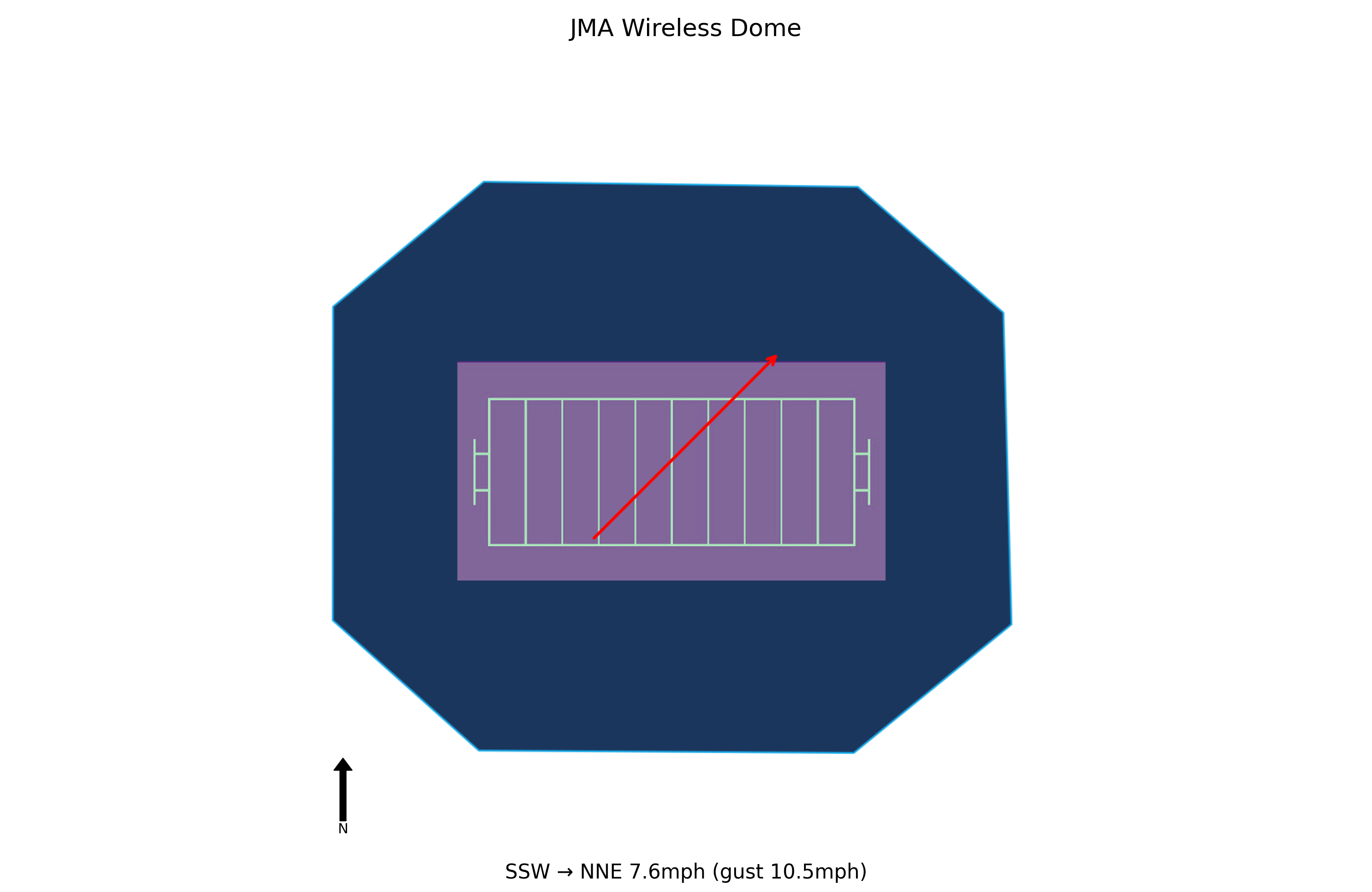
At 26.2°F, this is a cold-weather game. Cold conditions below 35°F historically compress scoring and reduce passing efficiency, favouring unders and run-heavy offences.
Precipitation chance is 76%, pointing to a wet-field game. High precip probability increases fumble risk and typically compresses both team totals.
Full conditions are shown in the data panel above. Forecast data sourced from WeatherAPI.com. Use the Line Value Calculator to apply a manual weather adjustment to your projected line.
Blue Chip Analytics power ratings rate UConn (-5.7) and Syracuse (-5.7) as essentially equal on a neutral field. In this range, HFA, travel, rest, and weather context carry more weight than the raw rating differential. Syracuse brings a meaningful home field advantage to this matchup (Blue Chip HFA: 2.7). Add this to the neutral-site differential to arrive at a venue-adjusted line.
Blue Chip Analytics power ratings represent expected point margin against an average FBS opponent on a neutral field, calculated from game data sourced via CollegeFootballData.com (CFBD). They are one input — cross-reference with the travel, rest, and weather data above before drawing conclusions.
Syracuse won and Syracuse covered the spread.